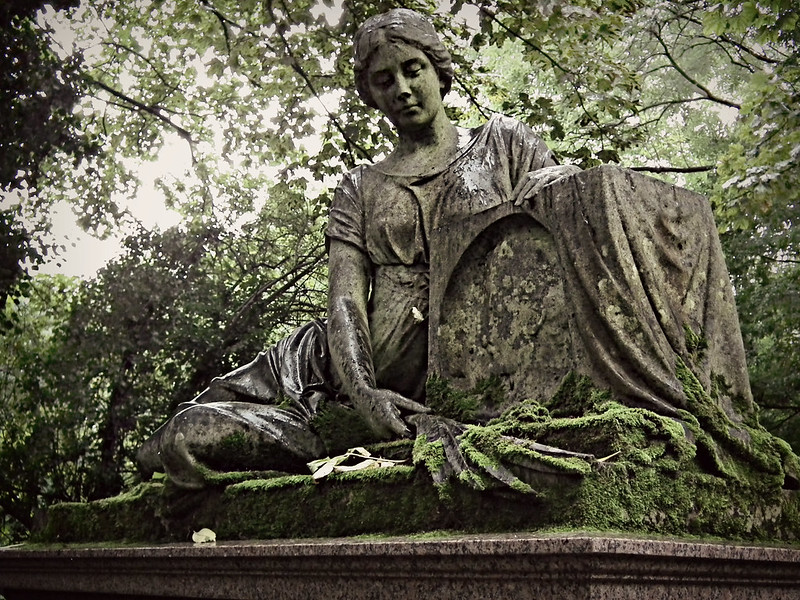
Thursday, 24 March 2016

"Immortal Rich! how calm he sits at ease, mid snows of paper, and fierce hail of pease"; John Rich (1692-1761), St John the Baptist, Hillingdon


The entries for December 1761 in the burial register for St John the Baptist, Hillingdon

Mr Aldridge, the parish clerk at St John the Baptist, Uxbridge Moor, recorded 7 burials in December 1761. Four of them were children, no ages given and three recorded with just their first names and noted as being the son or daughter of the Hills, Hodges and Smiths of the parish. The fourth, and saddest, buried on the 28th is a “child dropt i’th Ch(urch) yard; name unknown.” Henry Philips was buried on the 13th (truly an unlucky day for him) and Hannah Weeden, widow, on the 4th. Hannah’s no doubt modest funeral would have been easily eclipsed by the other interment taking place that cold winter day, that of the 69 year old John Rich for whom the parish clerk, dazzled by his celebrity, broke with tradition and recorded more than the bare fact of his name “John Rich, Esq Comedian of Covent Garden Theatre.” It is the only entry for the entire year where the deceased was considered worthy of the honorific Esquire and no other entry in the entire register gives an occupation. Rich’s grave is marked by the churchyard’s most splendid tomb. The epitaph reads “"Sacred to the memory of John Rich Esq. Who died November 26th. 1761 Aged 69 Years. In him were united the various virtues that could endear him to his family, friends and acquaintance: Distress never failed to find relief in his bounty, unfortunate merit a refuge in his generosity. Here likewise are interred Amy, his second wife, with their two youngest children, John and Elizabeth, who both died in their infancy."    

In his pantomime role as Lun
John Rich was born in 1692, his father, Christopher, was an attorney turned theatre manager who died in November 1714 leaving his two sons in possession of the newly rebuilt but as yet unopened theatre at Lincoln’s Inn Fields. John, still dressed in mourning, took to the stage himself on the opening night in December to deliver a prologue to Farquhar’s ‘The Recruiting Officer’. According to the D.N.B. “for the next forty-seven years Rich implemented his father's vision, first as manager at Lincoln's Inn Fields and later at Covent Garden, where he opened a lavish new theatre in 1732. He distinguished himself as the originator of English pantomime, introducing elaborate scenery and extravagant costumes into his productions, and he became the most celebrated comic dancer of his age.” He is best remembered for staging ‘The Beggar’s Opera’, the greatest commercial success of the eighteenth century stage, taking on John Gay’s opera when it had been turned down by the rival theatre at Drury Lane and from which he is said to have made £9000 in two years, the equivalent of millions today. The unparalleled success of the production gave rise to the immortal quip that it ‘made Gay Rich and Rich Gay’ though in truth Rich would have already been rich but Gay undoubtedly made him richer.

Rich’s prototype of the pantomime would not be recognised by that name today. Between the scenes of a serious (and apparently often dull) classical epic drawn from Ovid or some other similar source Rich interspersed comic scenes based on Italian Commedia dell’arte. Rich himself played a character he called Lun who was based on Harlequin. A Victorian newspaper account gives the flavour of the English pantomime.“One of the best of Rich's productions was his ‘Catching the Butterfly,’ declared by the chroniclers of the time to be "a most wonderful performance." His harlequin hatched from an egg, by the heat of the sun, was such an attraction that crowds waited under the piazza of Covent Garden from mid-day till evening for admission to the theatre. Rich's harlequin never uttered a word, but his gesticulations and expressions in dumb show were such as to provoke roars of laughter or the shedding of tears at his will. A writer of the time says " from the first chipping of the egg, his receiving of motion, his feeling of the ground, to his quick harlequin trip round the empty shell, through the whole progression, every limb had its tongue, and every motion a voice." Amongst the literati Rich’s pantomime was less well received. Henry Fielding lambasted it in Tom Jones:

“That most exquisite entertainment, called the English Pantomime …..consisted of two parts, … the serious and the comic. The serious exhibited a certain number of heathen gods and heroes, who were certainly the worst and dullest company into which an audience was ever introduced; and (which was a secret known to few) were actually intended so to be, in order to contrast the comic part of the entertainment, and to display the tricks of harlequin to the better advantage… So intolerably serious, indeed, were these gods and heroes, that harlequin ……was always welcome on the stage, as he relieved the audience from worse company.”

 Hogarth, who was supposed to be his friend, caricatured Rich as the performing Dalmatian dog that had appeared in his version of Perseus and Andromeda in "Rich's Procession" showing taking over his new theatre at Covent Garden 
His undoubted successes at Covent Garden failed to impress some of his contemporaries; John Genest called him “ill qualified for his situation” and said that he was without “talents adequate to the proper management of a theatre.” Charles Dibden summed him up (and dismissed him) as “the vainest and most ignorant of all human beings.” Scurrilous stories were retailed about his illiteracy, his eccentricity and his general ignorance. He could not or would not remember names and to the irritation of his associates in the theatrical world insisted on using alternative versions of them calling Tate Wilkinson ‘Williamskin’ or ‘Whittington’, David Garrick ‘Griskin’ and the writer Samuel Foote ‘Footseye’. When even those names failed him he simply called everyone ‘mister’. He was said to treat writers brusquely and with little respect. When one author demanded the return of his rejected play script Rich couldn’t find it but offered the writer the choice of any of the other large number of rejected manuscripts sitting in his drawer saying “A thousand to one but it may be better than yours mister.” He could be fairly short with his actors too. When one performing the ‘to be or not to be’ soliloquy from Hamlet failed to impress Rich told him “Toby may be a very good dog Mister but Toby will not do for me.  You need not trouble yourself any farther Mister.”

By 1755 he was wealthy enough to be making the King lavish and unusual presents.  According to the Derby Mercury of June 6 “Yesterday being the Birth-Day of his Royal Highness the Prince of Wales, a Pleasure Barge, built by John Rich, Esq; and presented to her Royal Highness, was launched in the Gardens at Kew, and named the Augusta. It is formed in an entire new Taste, and made to imitate a Swan swimming; the Representation is so Very natural, as scarcely to be distinguished from a real Bird, .except by the Size of it. The Neck and Head rise to the Heighth of eighteen Feet; the Body forms a commodious Cabin, neatly decorated, and large enough to accommodate ten Persons, and the Feet are so artfully contrived as to supply the Place of Oars, which move it with any Degree of Velocity. The Novelty of the Design, and the Elegance of the Execution, afforded a very particular Pleasure to the Royal Family, who were present, and the rest of the Spectators.”

John Rich and his many cats interviews the Irish actress Peg Woffington

Rich married three times; his first wife, Henrietta Brerewood he married on 7 February 1717 in St Clement Danes. They had one son, John, who was born on 3 May 1720 and was buried on 28 February 1721. Henrietta died in 1725. His second wife, Amy, was the mother of seven of his children: two sons and five daughters. She died ‘of a Hectick fever’ on 26 November 1737 and was buried in the churchyard at St John’s where Rich later joined her.  His third wife was Priscilla Wilford, a minor actress in the Covent Garden Company under the stage name of Mrs Stevens who, it was rumoured, had been a barmaid and, when her theatrical career failed to ignite, became Rich’s housekeeper. Rich married her on 25 November 1744. The new Mrs Rich fell under the influence of Methodism and became a religious enthusiast and made Rich’s life a misery. Tobias Smollett commented "The poor man's head, which was not naturally very clear, had been ordered with superstition, and he laboured under the tyranny of a wife and the terror of hell-fire at the same time."


Friday, 18 March 2016

The Place of Skulls; St John the Baptist, Hillingdon

Thomas Smith, late of this parish
Like many other churchyards which had for 500 years or more been plenty big enough to contain the bodies of all its deceased parishioners, St John’s was forced to expand its burial ground in the early nineteenth century. In still rural Uxbridge the church was able to acquire land adjacent to the exiting churchyard, something generally not possible in more crowded central London. Population growth perhaps played some part in increasing demand for burial space but the main reason the extra space was needed were the unexpected 18th century fads for coffins and gravestones. Up to the 17th century most Englishmen (and women) had been buried in shrouds directly into the ground, coffins being a relative rarity. A body in a coffin takes considerably longer to decompose than a body in a shroud and therefore prevents further burials in the same ground.  Once relatives knew that their dead would remain undisturbed they began wanting to mark the spot of the interment and the fashion for grave markers developed. Within a few decades coffins, gravestones and altar tombs gradually occupied all of the available space in churchyards forcing vestries to acquire land for burials.  


St John’s purchased a plot adjacent to the church for new burials in 1819. The existing churchyard remained largely untouched and so is a fascinating example of an eighteenth century burial ground with barely a Victorian intrusion to be found. It has many headstones dating from the early 1700’s almost of which are decorated with memento mori, though there are a few with cherubs. Most of these early gravestones are made from sandstone and have weathered badly, though some are still in relatively good condition. There are also an unusually large number of chest or altar tombs the most famous of which belongs to the one time owner of the Covent Garden Theatre John Rich (died 1761). 


Here lyes the body of Bertram  Hanington who departed this life June ye 22 1705
A more sophisticated execution of the motif from 1745
Elizabeth, wife of Richard Edmands
Edward Taylor, 1725

18th century altar tombs at Uxbridge

Saturday, 12 March 2016

He sent forth his angel with a great trumpet; Marthe Josephine Besson (1852-1908), Highgate East Cemetery


Up a steep and neglected muddy side path in Highgate East Cemetery, hidden amongst the undergrowth and surrounded by toppled and leaning gravestones, you will find this striking monument to a Victorian businesswoman. The inscription reads:  

In loving memory of
Marthe Josephine Besson,
daughter of Gustave Besson
of Paris and London
and beloved wife of Adolphe Fontaine.
Died 15th Sept 1908, aged 56 years.
Her great talents and untiring energy gained the praise of the foremost masters in the musical world.

It looks like a touching tribute from a grieving husband and one could lazily assume that Adolphe and Marthe were mutually devoted and lived long and contentedly in conjugal bliss. But one would be wrong. 12 years earlier Adolphe was trailing through Europe after Marthe and her Spanish lover accusing her of stealing his fortune, trying to have her arrested by Scotland Yard and generating a scandal that he must still have been trying to live down when he instructed A. MacDonald & Co. Ltd of Euston Road to produce his wife’s funeral monument.

Marthe’s father, Gustave was the son of an army colonel who was apprenticed at the age of ten to a maker of military brass instruments. Gustave was a talented instrument maker and an astute business man. He established his own firm and thrived but was incensed in 1845 when the French War Ministry adopted the brass instruments of his arch rival Adolphe Sax. He became embroiled in anti-Sax litigation which did not go well and in 1854 Besson instruments allegedly produced in contravention of sax patents were seized by the authorities. Gustave transferred his assets into his wife’s name to avoid having them seized as compensation and fled to London. In London he set up a new factory while his wife nominally continued to manage the French business. By 1873 the two highly successful businesses had been joined and there were factories in both London and Paris.


Marthe was trained as an instrument maker by her father and she seems to have inherited his business acumen as well as his talent for producing brass. Gustave died in 1874 and her mother in 1877 and from this point the 25 year old Marthe ran the business herself. She continued to run it even when she married Adolphe Honore Fontaine in Marylebone in 1879. Her husband was  an attaché at the French Consulate a man of uncertain temper who was no doubt very charming and affable in the days of their courtship but who proved not so easy going once the ink on the marriage certificate had dried. Marthe changed the name of the firm to Besson-Fontaine and allowed her husband to dabble in the business. Things did not go well. Adolphe quarrelled with the employees and eventually caused a strike and six week lock out amongst the 95 workers at the Paris factory. There were also hints of domestic violence, Marthe later said that Adolphe had tried to kill her. Despite their differences the couple had a daughter, Martha Juliette Gabrielle Fontaine born a year into their marriage, but this did not stop Marthe from leaving her husband in France in the early 1890’s returning to London with her daughter, trying to obtain a divorce in the French Courts and, in the words of a contemporary newspaper “contracting an improper intimacy with a Spaniard employed by her as a traveller.” When she failed to get her marriage dissolved without consulting Adolphe she liquidated most of her business assets selling off bonds and share certificates and then packed her bags and set off to Europe with her Spaniard, Señor Alcaraz. The furious Adolpe set off in hot pursuit, following her to Belgium, Holland, and Portugal, denouncing her as a thief and an adulteress to the French consul in every town she stopped at and trying to get the civil authorities to arrest her. The European press followed the case with avid interest and Marthe showed no hesitation in retaliating against her husbands accusations to any journalist who cared to listen.


Marthe portrayed in the French press at the time of the strike in Paris

Events came to a climax in Seville where Marthe and her daughter put up at the Hotel Europa. Her husband was only a few days behind and the correspondent of El Liberal, the Spanish newspaper was waiting for him at the station when he arrived. The reporter watched him go straight to the Post Office where he tricked his wife’s address and post restante correspondence out of the clerk and then followed him to the French Consul where he immediately denounced his wife and demanded action. From the Consulate he went to his wife’s hotel where his young daughter happened to be in the foyer.

“Follow me!,” he yelled at the startled child, “and if you refuse to recognise paternal authority I shall have you locked up!” His daughter ran away crying before he could grab her and ran back to her mother’s room. Adolphe booked himself into the neighbouring guesthouse, the Fonda Cataluna, from where he could watch his wife’s comings and goings.

The following day he met Señor Alcaraz in the street and cried “Voila le voleur!” (“here is the thief!” Voleur a’coeur – thief of hearts). There was a scuffle between the two men and Adolphe yelled obscenities and insults in French at his former employee. The police were called and arrested both men, eventually letting Adolphe go but keeping Señor Alcaraz in custody. A few days later the correspondent of El Liberal was reporting further details of l'affaire Besson. Marthe’s daughter left the hotel with an employe to do some shopping only to meet her father in the street. Adolphe immediately started shouting that her mother was a thief and unfaithful to which the daughter responded by bursting into tears and running back into the hotel shouting “Ma mére est bonne!” The following day, at dusk, Marthe let her daughter venture out again accompanied by a hotel employee. Adolphe was lurking by the cab rank and once again tried to seize his daughter. This time though Marthe was watching from the hotel lobby and on seeing her husband she ran out into the street screeching “Voleur miserable!” holding her hands out as though she mean to rake her husband’s face with her nails. El Liberal’s correspondent commented “As Monsieur Fontaine is well acquainted with the power of Madame Besson’s nails, having had them dug into him onto the day he arrived in Seville on the patio of the Hotel Europa, he hid himself in great consternation between the hackney carriages.” There were loud cheers and laughter from the cab men and passers by which immediately ceased when Juez Señor Anaya sternly appeared accompanied by the lawyers acting for the warring couple and the French vice-consul. Adolphe was left in the hotel lobby while the legal contingent followed Marthe up to her rooms. There the judge broke the bad news that she would have to return her daughter to her husband as he had accused her of abducting a minor. There followed a scene of such hysteria with wailing Marthe and her sobbing daughter both prostrating themselves before the judge that he changed his mind and ordered her to removed to a convent school instead, the Colegio del Valle.

While Adolphe was dealing with his wife in Spain his representatives were also trying to deal with her through the British Courts. Their first line of attack had been to seek an injunction against Parr’s banking Group to try and stop them honouring his wife’s drafts against a letter of credit she had obtained by selling bonds and shares. The Judge refused to grant an injunction against the bank on a technicality, saying that only Madame Besson could be restrained from drawing on the account in which case the bank would have to dishonour the drafts. The next move was to have counsel apply to the Clerkenwell Police Court for a warrant for Madame Besson’s arrest on charges of stealing £11,150.00. The Judge granted the warrant and a few days later Scotland Yard dispatched Inspector Brookwell to Spain to arrest and accompany Madame Besson back to London to answer the charges made against her. Marthe had started proceedings against her husband in the Spanish Court for assault, slander and appropriation of private correspondence but this counted for nothing when Inspector Brookwell arrived with his warrant from Clerkenwell. Marthe was taken into custody, and within a few days the authorities had decided to allow her extradition to the UK via Gibraltar.


On November 29 Madame Besson made her first appearance at Clerkenwell Police Court, charged with stealing £35,000 in bonds and share certificates and appropriating plate and furniture belonging to her husband. Mr Avory, the prosecutor (acting for Adolpe, this was, despite the involvement of Scotland Yard, a private prosecution) outlined the case against her and objected to her been given bail, “If bail were granted perhaps the expense of the extradition would be thrown away. This lady left the country with her paramour and travelled to Spain, intending to go to America…”

“You say she ran away with someone else?” asked the Judge, suddenly perking up.
“She ran away with a Spaniard and has been living with him adultery ever since!” thundered Mr Avory. Despite the objections the Judge bailed her on her own recognisance.
 

Marthe was back in court the following week where, for the benefit of the Judge, Mr Avory went into more details about the background of the case. Adolphe was, he explained, totally mystified by his wife’s aberrant behaviour and had no idea why she wanted a divorce. They had not quarrelled prior to their separation and he was heartbroken by her decision to leave him. He read out a letter from Adolphe to Marthe in May 1894 to show how things stood between them: “My darling a million kisses. It is with much joy that I would meet you at the hotel. I am anxious, not receiving news of you. I am devoured by grief. You ought  to understand it how much I love you. I only live for you and my children. How can you make me suffer as you do? We are making each other miserable by our separation. Is it possible that the existence you are carrying on is what you desire? It is altogether a false one for you. I pray you to come back and let us take our life as honest people and throw over this Bohemian life of yours.” Adolphe took the witness stand under Mr Avory’s gentle examination explained how his wife not only betrayed him with another man, a Spaniard and an employee, but went on to steal almost everything he owned, leaving him penniless. It was an affecting performance but the story did not stand up when subjected to the fierce cross examination of Mr Gill, Marthe’s counsel. He went straight to the nub of the matter, when Marthe married Adolphe what were his wages at the French Consulate?
“That is nothing to do with the case!” Adolphe objected.
“Answer the question sir and do not waste the public time,” the Judge intervened.
“I had no wages,” Adolphe responded, “I was not a cook or a clerk.”
“Don’t aggravate the witness with questions,” Mr Avory stepped in, “ask him what his salary was.” Adolphe admitted to earning a mere 1,800 francs a year.
“This is a blackmailing prosecution…” Mr Gill shouted, “I will show that the prosecutor has been living upon my client!” He went on to accuse Adolphe, through a series of detailed questions, of having no means when he married, of occupying a room at 213 Euston Road at 6 shillings a week at the time, and of being supported by a Mademoiselle Saiseau a dressmaker at the same address. He eventually admitted the dressmaker was his sweetheart and confirmed that he had met Marthe at the French consulate when she went to conduct some business there and had taken an interest in her when a French confectioner told him what her business was and that she was in love with him and ready to marry him. Did he lie to his wife and say that as a clerk in the consulate he was not allowed to engage in business? There were humiliating questions about how much cash he had at the time of his marriage and how much he contributed towards the furniture at the couples first married home. “I cannot say, it was 20 years ago,” Adolphe replied. Well how much was he supposed to contribute and where was the money to come from? How much of it was in cash?
“I cannot say. How can I say to a sixpence how much it was?” Adolphe said in exasperation.
“Nonsense sir!” the Judge thundered, “You can surely say about how much you had when you were married. You seem to be trifling with the court. What are we take the amount at – tuppence?” When the questioning moved on to the particulars of the charges things went from bad to worse for Adolphe. Briefed by his counsel about the differences between English and French law in relation to the property of married women Adolphe kept continually referring to them until the Judge shut him up “I beg to tell you, once and for all, that I object to your making speeches about Englishmen and Frenchmen and the practice in England and France. Answer the question like other people.” There then followed a confusing exchange about a bank pass book belonging to Besson &  Co which drove the Judge to complete exasperation, “I cannot understand this witness! His evidence is quite unintelligible!”
"It must be a matter of surprise that you have listened to this case as long as you have,” Mr Gill, acting for Marthe, sympathised.
“If he had been an Englishman I think I should have had to commit him for contempt of court,” the Judge observed.  


When the verdict was finally delivered it could have come as a surprise to no one. The prosecution’s case rested on the fact that under French law the property sold or taken by Marthe belonged to her husband as there was community of property between them under their marriage contract and that in no case could a wife dispose of property belonging to the community. They argued that Madame Besson could only dispose of her personal property to a value of £1000. The defence argued that under the Married Women’s Property Act the couple’s business assets all belonged to Marthe who had the right to dispose of her property as she saw fit. Their portrayal of Adolphe as a penniless adventurer who lived on his wife’s charity probably did as much damage as the legal arguments. Marthe was acquitted of all charges against her.    

What happens next is a mystery. Marthe apparently didn’t divorce Adolphe but whether the couple were reconciled we simply do not know. Does the elaborate funeral monument apparently commissioned by Adolphe suggest the couple arrived at some form of rapprochement? Or was he giving in to a guilty conscience? His jealousy and his undignified pursuit of Marthe across Europe and the humiliations he undoubtedly suffered as a result indicate strong feelings on his part towards his wife. Or was all he ever cared about the money? There are some clues; Martha fails 
to show up in the 1891 and 1901 census which might mean that she was living abroad. If she had gone abroad she returned to England in 1904 when she appears in the electoral register and the phone books (telephone number Gerrard 5242) living at 5 Russell Mansions in Southampton Row. She seems to have been living alone. When she died on September 15 1908 her death was registered twice and she appears in the death index as Marthe Josephine Besson and Marthe Josephine Fontaine. She left a fortune of £46,610 2 shillings and 11 pence, her will administered by Albert Durrand, Juge au Tribunal Civil de Reims and the Public Trustee. Her daughter would have been 18 and therefore technically a minor and not legally competent to administer her own affairs. Under French law Adolphe, as her lawful husband, would have been entitled to half of her estate. As after their very public falling out of 1895-96 the couple kept their private life very private with no further scandals played out in the blaze of publicity we will never know how matters between were finally resolved.

Update


What happens next is a mystery? All my research on Marthe Besson failed to pick up a rather blatant clue which is actually on the memorial itself: “Also in Loving Memory of Frank Besson Fl. Lieuy. RN who was killed in the Dardanelles 20th Dec. 1915 aged 20 years.”  Marthe had a son in 1895, the court battle with her husband had to be adjourned for four weeks whilst she had the baby. This post completes the story of Marthe Besson and her son Frank.  

Tuesday, 8 March 2016

Secret Portuguese Jews, floating coffins, Edgar Allan Poe, a Victorian masterpiece and a pair of Australopithecines - Old St Mary's Churchyard,Stoke Newington


It was the unexpected pairing of a Portuguese surname on a 19th century chest tomb in a north London churchyard that ignited my obsession with graveyards and cemeteries.  The tomb belonged to John Furtado, the son of Isaac Mendes Furtado according to the rather worn inscription. Idle curiosity started me researching and a digital copy of The Gentleman’s Magazine of 1803 revealed the startling fact that buried in “May; At Stoke Newington Mr. Isaac Furtado, a Jew merchant, who was buried in the Church-yard, in a grave dug North and South, instead of East and West, according to the usual custom. His son and two daughters were baptised and confirmed in the Church of England in March 1799, and their conversion was announced to the public in a printed letter addressed to them by the late Rev. Wm, Jones.” Further research uncovered that Isaac Furtado was a Portuguese Marrano, a secret follower of Judaism 300 years after all Jews in Portugal faced the blunt choice of converting to Christianity or accepting exile. Once in England Isaac openly practiced Judaism and apparently never converted even though his children did.  Quite how Isaac managed to get himself buried in an Anglican churchyard is a mystery I have not been able to solve.


Stoke Newington was a small village 3 miles North East of London before the burgeoning metropolis swallowed it in the 19th century. There were only a hundred communicants when William Patten 'new builded' the church of St Mary in 1563, replacing the stone, flint and pebbles of the medieval building with brick. The church has been repaired and ‘beautified’ several times but by 1791 the growing popularity of Stoke Newington as a rural retreat for rich Londoners meant that the church was already cramped for the five hundred or so parishioners who turned up for Sunday morning services. A survey in 1827 revealed a rotten roof and drainage so bad that coffins were floating in the vaults beneath the church floor. It was restored by Sir Charles Barry (architect of the Houses of Parliament) in 1829 but even though space was made for more seating the church was still too small and in 1853 a decision was taken to build a much newer bigger church across the road.

In another improbability Old St Mary’s makes an appearance in a minor classic of American literature. Edgar Allan Poe plundered his memories of attending church services there in his doppelganger story ‘William Wilson’. He attended Manor House boarding school in Stoke Newington for 8 years from 1815 until 1823 and drew on his recollections of the school, the church and the village as background for his story. He describes how twice a day on Sundays, the boarders “were paraded in the same formal manner to the morning and evening service in the one church of the village. Of this church the principal of our school was pastor. With how deep a spirit of wonder and perplexity was I wont to regard him from our remote pew in the gallery, as, with step solemn and slow, he ascended the pulpit! This reverend man, with countenance so demurely benign, with robes so glossy and so clerically flowing, with wig so minutely powdered, so rigid and so vast, -- -could this be he who, of late, with sour visage, and in snuffy habiliments, administered, ferule in hand, the Draconian laws of the academy?”


I have been reading Thomas W. Laqueur’s book “The Work Of The Dead” with great pleasure. One of the many things I have learnt from it is that the churchyard in the well known Victorian painting ‘The Doubt: Can These Dry Bones Live?’ by Henry Alexander Bowler was Old St Mary’s.  Laqueur merely mentions the fact in passing but I was curious about the circumstances which led Bowler to Stoke Newington and this particular churchyard and tried to find out more.  I have drawn a complete blank and not even able to verify from any other source even the bare fact of the churchyard in the painting being  St Mary’s. Lacqueur’s extensive end notes give no clue to his source for this information. I have started to  have doubts even though I desperately want it to be true. The church in the background of the painting is clearly built of brick. Old St Mary’s is also built of brick but in the 1820’s virtually the whole of the exterior was rendered in 4 inch thick cement to make it look like stone; Bowler didn’t paint his picture until the 1850’s, he wasn’t born until 1824 by which time the brickwork had already disappeared. Whether it is true or not what Laqueur has to say about the picture is interesting:

When an important nineteenth-century painter takes on the subject of mortality and immortality, the scene is set in a churchyard, not a cemetery. There were no bodies evident in the latter. Henry Alexander Bowler’s The Doubt: ‘Can These Dry Bones Live?’ was painted in 1855 as a meditation on Tennyson’s In Memoriam. A young woman is standing amidst the genteel disrepair of what appears to be a substantial country churchyard (but actually is the churchyard of the London suburb of Stoke Newington). The box tomb on her right has lost its siding, exposing the brick vault beneath; this is the sort of shelter that sparked late eighteenth-century litigation, an effort that went against the nature of the place, that somehow tried to bring order to an individual grave by claiming for it a permanence that some opposed. The stone behind her has sunk almost out of sight; further back, an old-fashioned and short-lived grave board with elaborately carved posts running laterally along the body beneath is visible among a picturesque array of variously angled slabs. She rests her arms on the gravestone of John Faithful and looks onto the disturbed earth of the grave—there is no hint why it is in this condition, but it is almost a trope of churchyard representation. More specifically, she contemplates the skull that is lying there and the femur and bits of ribs that are poking out of the ground. This would have been unthinkable in the new regime of the cemetery. The red brick buttresses and a few windows of the church building itself stand out as if to make the point of a historical continuity of the Christian community of the living and the dead, represented by the field of markers in various stages of decay—its past, by the church that serves the living, and by the visit itself. John Faithful died in 1791, and the woman’s costume makes clear that the scene we are witnessing occurred sixty years later, in the 1850s.

The stark fact of death is counterpoised with the promise of everlasting life: I AM THE RESURRECTION AND THE LIFE, it says on Faithful’s stone, which we, but not the young woman, see; RESURGAM (I shall rise again) is written on the slab nestled in the ground at the foot of a large, very much alive and growing chestnut tree. Although topologically specific, the painting’s landscape, like that in Nicolas Poussin’s Et in Arcadia ego or the imagined landscape where Ezekiel confronted “dry bones,” is prototypical: the universal country churchyard.


The churchyard’s best grave is this late 18th century one with double skulls. The inscription is so worn as to be almost completely illegible; the last three letters of the surname appear to be WEB so I would guess the owner was a Webster. The skulls have also been ravaged by inclement weather and acid rain and now look more like a pair of bleached fossil Australopithecine craniums than anything human. 


Friday, 4 March 2016

Presenting the Flemish Hercules; Peter Ducrow (1765-1815), St Mary-at-Lambeth


THE BENEFIT OF MR Ducrow & FAMILY ON THURSDAY Evening, Oct. 23rd 1806. MR DUCROW begs leave to inform friends and the public, that he has, at considerable expense  prepared an entire CHANGE OF PERFORMANCES ; in particular, Mr Ducrow will, for that night only go through the same Performance as exhibited before his MAJESTY AND THE ROYAL FAMILY at the Fete that was given at Frogmore, near Windsor in the year 1801.—SLACK WIRE DANCING, in full swing, by Mr Ducrow, who will carry several surprising Balances of plates, swords, drinking glasses, &c. and will display several astonishing feats with oranges and forks, assisted by the INFANT of HOPE—POLANDER’S EQUILIBRIUM, with the extraordinary performance of the Serpentine Ladder, by Master Ducrow.  A NEW DANCE, composed by Mr D’Egville, in which Master Ducrow will make his first appearance—THE KINGS POST; or, The Ruins of TROY. Master Ducrow will perform on the TIGHT ROPE, several surprising NEW FEATS, without the balance pole, and likewise on the Horse —The FLEMISH HERCULES will, for this night only, Carry a Stage with TWELVE PERSONS on his Hands and Feet.  The whole to conclude with a Grand New HARLEQUIN PANTOMIME.
N. B. In consequence of the great variety of entertainment' that will performed on that night, the doors will open at half-past five, and the performance begin at half-past six. Tickets to be had of Mr Ducrow, No. 6, Minshul  Street; Sir Sidney Smith, Port street; Mr Cowdroy’s Printing Office; and at the Circus.
Manchester Mercury - Tuesday 21 October 1806

The Flemish Hercules was a versatile performer.  The mainstay of his act, as you would expect of someone named after the son of Jupiter and Alcmene, was circus strong man.  To the astonishment of audiences up and down the country, he lifted and balanced an extraordinary array of heavy props on his hands and feet;  coach wheels, ladders, chairs, children and adults.  He was also a celebrated equilibrist on the slack wire, “in which performance he stands unrivalled in this or any other Kingdom,” according to the Manchester Mercury in 1799. Here his props were a less hefty selection of glasses, swords, plates and other objects either sharp or breakable. The act also included “remarkable feats with oranges and forks.” He could also perform no less remarkable feats on the trampoline, as the Manchester Mercury promised in 1799 when for “that night only, he will go through those wonderful Leaps from the trampoline, in particular, one over Eighteen Grenadiers, with shouldered firelocks and fixed bayonets; also through a Real Fire, and will fly over a grand Pyramid of Light.” When required he passed muster in small parts in ‘dramatic spectacles’ such as “Blackbeard or The Pirate” in which he played the slave Abdallah in London and Manchester.  Later in his career he became noted as a circus equestrian, a role in which his eldest son Andrew Ducrow would eventually eclipse him.

The Royal Circus, Southwark
Peter Ducrow was born in Bruges in 1765. He must have begun to acquire his impressive range of circus skills in Belgium but we know nothing of his early career on the continent. We don’t know exactly when he came to England but in 1788 he married Margaret Ross in St Mary’s Walworth. His first recorded performance dates from 1792 in Thomas Franklin’s show at the Royal Circus in Southwark but in all likelihood he was pursuing his career in less well publicised venues long before then. The first of his seven children (2 boys, 5 girls), Andrew was born in 1793 at the Nags Head, a stone’s throw away from the Royal Circus. In the 1790’s he performed in Edinburgh, Glasgow, Manchester, Liverpool, Dublin as well as The Royal Circus and Astley’s Amphitheatre in London. In October 1797 he appeared to great acclaim at the Teatro Nacional de São Carlos in Lisbon accompanied by the Infant Hercules, the barely four year old Andrew. Thereafter playbills and advertisements often referred to him as ‘Ducrow from Portugal’ or ‘from the Theatre Royal, Lisbon.’ In the summer of 1800 his career received an even bigger boost when he was chosen to perform at a ‘rustic fete’ held by the Royal Family at Frogmore. One newspaper account described Princess Augusta Sophia’s tour of the fete with her retinue:

The Princess then conduced her company to a space of ground near the Hermit's cell, where was erected a stage, on which Mr. Ducrow, the Flemish Hercules, exhibited his inimitable performances on the slack wire; and afterwards on the stage his extraordinary feats of strength, such as balancing three large coach wheels, also a ladder to which were affixed two chairs with two children on them, and bearing on his hands and feet a table in the form of a pyramid, with eight persons on different parts of its surface and other like exploits finished this part of the entertainment.
Chester Courant - Tuesday 22 July 1800

He was also favoured with the personal attentions of King George III who quizzed him about the size of his muscles and was told that they were one fifth larger than those of men who were heavier and taller than him. Disaster almost struck when the stage collapsed under the weight of Ducrow’s apparatus and stage company. The story is told in Andrew Ducrow’s biography; “...at the fete of Frogmore where (he) his father and brother were engaged: a stage was erected for the exhibition, and in consequence of the weight upon it by some of Mr. D.’s fetes (feats) part of the stage broke in and our hero’s little brother fell through. His Majesty instantly rose and came in person to see if the little fellow was hurt. On being answered with the utmost simplicity by the child . . . the King asked him several questions....” To Peter’s embarrassment the young Andrew addressed the King as Mister but when he tried to intervene the King told him the title of Mister was good enough for him until the stage was mended. 

Andrew Ducrow

Even in the early 1800’s when the brutal treatment of children was both common and generally accepted, Peter Ducrow’s parenting aroused controversy. Andrew as the oldest and the most talented bore the brunt of his father’s harsh training regime, being made to work up to 16 hours a day from a very early age. To teach his son the slack wire Peter’s method was to balance him on the rope and then warn to stay there or “be ‘leathered”.  When the youngster was appearing in Bath he fell from the horse. Peter dashed into the ring and to the delight of the crowd tenderly collected his son and took him backstage where his broken leg apparently caused to shout out in pain. In reality his furious father was laying about him with a horsewhip for being so careless as to put himself out of action. At another occasion Joseph Grimaldi the clown had to intervene when Peter was thrashing his son. “It’s best to make an impression when the wax is soft,” Peter told Grimaldi. “Yes, but the whacks were not soft,” rejoined Grimaldi.  As Andrew grew older Peter performed less often and gradually assumed the role of his sons manager.  As his son’s extraordinary talents developed Peter grew more ambitious and more determined to reap as much benefit from him as he could. He hired the Surrey theatre to showcase his son’s equestrian act and ended up overreaching himself and becoming bankrupt. He died in the long cold winter of 1814/15, on 6 January and was buried in the churchyard of St Mary-at-Lambeth.


Sacred to the memory of / Mr Peter Ducrow / late of Astley's Amphitheatre / who departed this life / January 6th 1815 aged 49 years / Also Mrs Hannah Cox / daughter of the above / who departed this life / April 9th 1834 aged 31 years / Also / Mr John Ducrow / son of the above and brother of Andrew Ducrow Esq / proprietor of Astley's Amphitheatre / who departed this life / May 23rd 1834 aged 38 years

Saturday, 27 February 2016

Extract of Sunbeam and Beetle Wing, the Medical Miracles of Lionel Lockyer (1599?-1672), Southwark Cathedral


“In the north transept of Southwark Cathedral, close to the Harvard Chapel, are the monument and grave of Lionel Lockyer, a seventeenth century quack. The monument is perhaps the most prominent object in the transept, and includes as its principal feature a large semi-recumbent figure of the doctor. The face wears an expression of unctuous self-satisfaction, quite in keeping with what we know of Lockyer himself.”   
Hector A. Colwell M.B. Lond.

What little we can learn of the life of Lionel Lockyer we have to learn from his detractors, in particular to his principal rival in the field of patent medicine, the American alchemist George Starkey (or Eireneaus Philalethes as he was known in alchemistical circles). In 1664, goaded by Lockyers overwrought claims for his famous pills, Starkey wrote “A smart Scourge for a silly, sawcy Fool, an answer to letter at the end of a pamphlet of Lionell Lockyer.” Starkey clearly hoped his tract would demolish Lockyer’s reputation and fatally undermine his business but he was to be disappointed.  Not even death managed to do that; in 1824, 150 years after his death, James Granger reports that Lockyer’s Pills were still being sold by Newbury the bookseller in St Paul’s Churchyard.
 
A contemporary portrait
From Starkey we learn that before he took up medicine Lionel Lockyer had been a tailor and a butcher and that he had learned his medicine from a certain Molton of Hogg Lane. The first version of his pills, “a very common and churlish medicine” had been simply produced by dyeing some pills produced from a solution of the salt of antimony bright red with cochineal and vending them as ‘mercurialis vitae’. A more refined product, Pilulae Radiis Solis Extractae, one of the key ingredients of which was supposedly sun beams, made Lockyer a fortune. The vulgar had trouble with the Latin name so Lockyer, citing a biblical precedence simply named them after himself;  "Absolom because he had no son to succeed him, he erected a Pillar and called it after his own name (2 Sam. xviii, 18). And I have had sons, but They are not, and so I shall call the pill after my own name, Lockier's Pill."' The unsympathetic Starkey never mentions Lockyer’s loss of his children; at the time it was not perhaps a noteworthy event.

Lockyer had a genius for marketing. He supposedly printed upwards of 200,000 copies of his famous handbill advertising the miraculous qualities of his pilulae which were a medicine “of a solar nature, dispelling of those causes in our Bodies, which continued, would not only darken the Lustre, but extinguish the Light of Our Microcosmical Sun.” The price of this sovereign remedy was 4 shillings a box, the box stamped with the makers coat of arms and only available from some forty authorised dealers in town and country and which included “Mrs. Harfords at the Bible in Heart in Little Britain, Mr. Russel’s in Mugwel Street near Cripple Gate, Mr. Randal’s at the Three Pigeons, beyond St. Clements Church, in the Strand, Thomas Virgoes, cutler, upper end of New Fish Street and Mr. Brugis, printer, next door to Red Lyon Inn, in Newstreet near Fetter Lane.” As was generally the case this was another pill to cure all ills and even to be taken by those in full heath as a “preservative against all accidents as contagious aires, for which it stands Centinel in the body and not permitting any enemy of nature to enter.” Lockyer’s broadsheet also included case studies demonstrating the efficacy of his remedy "Mrs. Dixon suffered for two years at least with a griping, gnawing pain in the belly, and by the use of my Pills, and God's blessing upon it, was cured; For before she had taken of my Pills six times she had a live worm come from her by Siege, four yards long; the woman lives in Dead-man's Place in Southwark, near unto the Colledge Gate. Her age is about thirty-two years, the worm came from her the latter end of May, 1662. If any desire to see the worm I have it by me." He also relates the heart warming story of a young man who “told a friend of mine, that he had the POX, who gave him two boxes of pills, and in three weeks time he was perfectly cured, although he scarce went to bed sober all that time, and within three weeks time he married a wife, and both of them very well to this day."


Lockyer later added an appendix to his advertisement, a letter supposedly from a “Person of Quality” which discloses that on June 13, 1664 Lockyer calcined the powder for his pill before King Charles and the Court at Southampton House. It was this letter that drew the ire of George Starkey and drove him to compose the “smart Scourge” in which he poured scorn on Lockyer’s, or his correspondent’s, Latin “I will take notice first of your false Latine....for which I should take you to task as a rigid Paedogogue, and nake you untruss for the first fault, your Breech would be bloudy and too sore to sit on, if for all the lapses committed in that very short epistle you had (as you deserve) a several lash.”

Locker died in 1672 leaving a small fortune of £1900 in ready, the leases on four houses and a quarter share in a ship. As well as a lavish funeral and his ostentatious monument he left a sizeable amount towards charity. Even in death he could not resist one last chance to sell his pilulae and his epitaph is little more than an advertising opportunity;
     
Here Lockyer: lies interr'd enough: his name
Speakes one hath few competitors in fame:
A name soe Great, soe Generall't may scorne
Inscriptions whch doe vulgar tombs adorne.
A diminution 'tis to write in verse
His eulogies whch most mens mouths rehearse.
His virtues & his PILLS are soe well known
That envy can't confine them vnder stone.
But they'll surviue his dust and not expire
Till all things else at th'universall fire.
This verse is lost, his PILL Embalmes him safe

To future times without an Epitaph


Wednesday, 24 February 2016

Felo de se Part 2, suicide by arsenic: William George Williams (1829-1866), West Norwood Cemetery


Guy's Hospital
In December 1866 Sarjeant Payne, the City of London and Southwark Coroner assembled a jury At Guys Hospital to deliberate on the cause of death of a 37 year old Welshman who had been picked up by a policeman in the Blackfriars Road in Southwark ‘reeling’ and pleading to be taken some where to lie down. Mr Donne, the house surgeon, told the inquest that the deceased had been admitted to the hospital at around 5am on Tuesday 4 December suffering from the effects of arsenic poisoning. He vomited copiously before he finally died at 8am, his stomach contents confirmed the presence of arsenic as did the post mortem. The deceased had told one of the nurses, Mary Ann Shore that he had been drinking for a week, had taken half an ounce of the poison and had spent £500 of someone else’s money.  The Ward Sister, Mary Jane Reeves produced a pocket book which had been found on the deceased. If it were his, which seemed beyond doubt, it named him as W.G. Williams and gave his address as Clifton Road, Newport, Monmouthshire. Inside was a suicide note which pleaded his wife’s innocence of the crime of stealing the money and begged for her to be taken care of. Sarjeant Payne was told that the Stewards Office of the hospital had written to Newport asking for someone to officially identify the body but had as yet received no response. The inquest was adjourned until the following Friday.  A full account of the proceedings on the Friday was given in The Brecon Reporter and South Wales General Advertiser of Saturday 15 December;

“An inquest was held at Guy’s Hospital, Friday evening, respecting the death of a man, named William George Williams, aged 37 years. The evidence showed that on Tuesday morning last a policeman was on duty near the Surrey Chapel, in Blackfriars-road, when the deceased reeled towards him, and asked that he might be taken to some place where he could lie down. He said that he had swallowed half an ounce of white arsenic, and did not feel well. He then gave the policeman a paper labelled “white arsenic,’’ and said that he had bought the poison at Newport, in Monmouthshire, four years ago. At that time he intended to poison rats, not himself. The constable led him to the hospital, and on the way the deceased told him how he had been guilty of spending a large sum of money which was not his own. If the poison had not a fatal effect he knew that a serious charge would be preferred against him, and against others who were more to blame than himself. He described himself as a clerk to a commercial house in Newport, Monmouthshire, and said that if he “got over” the poison the policeman would find out all about the money which he had wrongly taken. The amount was £5OO. At times he seemed exceedingly anxious that his life might be saved, and said that scarcely knew what was doing when he took the poison. He was admitted to the hospital, and died there in about three hours. Before his death he repeated much of what had said to the constable, and added that he had been drinking for a week before attempting suicide. He had about him a pocket-book, in which he had written as follows: “This pocket-book belongs to W. G. Williams, clerk, Clifton-road, Newport, Monmouthshire. My wife is quite innocent. I mean to die Monday. My wife had none of the money. Please take care of her. I die the day of the Reform Bill demonstration.” Whilst he was lying in the hospital it was ascertained that he had a sister residing in Chelsea, and she was sent for. At the inquest she stated that she had not seen her brother for 10 years previously, and for that time his family had entirely lost sight of him. A letter from his wife was read, in which she described herself as being utterly destitute, and ignorant of any place where she might obtain bread. She was sure her husband could not have spent all the money he had taken away with him. Alter deliberating for some time the jury returned verdict of felo de se. The coroner issued his warrant for the burial the body of the deceased by torchlight, and between the hours of nine and twelve at night. The hospital authorities stated that they intended that the interment should take place at Norwood. It appears that the metropolitan police have received intimation that the deceased was “wanted’’ for having embezzled large sums of money.”

The Surrey Chapel in Blackfriars Road, Southwark where the dying Williams approached a policeman for help  
The authorities wasted no time in carrying out the burial. The inquest took place on the Friday evening according to all the newspapers, and William G Williams was buried the same night. A market cart was used to transport the coffin to West Norwood, leaving Guy’s at 9.00pm. The Daily News of Saturday 8 December carried a full account of midnight interment:  

“For the first time within a quarter of a century, Norwood Cemetery was, on Friday, at midnight, the scene of the burial without Christian rites of the corpse of a felo-de se. The coroner's jury, which, last evening at 6 o'clock, found that the commercial clerk, William George Williams, had committed the crime of self-murder, imposed upon Mr Serjeant Payne the necessity of issuing his warrant for the burial of the body by torchlight between that time and midnight. The last verdict of felo de-se returned at Guy's Hospital was in the case a person who died there twenty years ago, and on that occasion the horrible form of driving a stake into the body was gone through. The ghastly ceremony was performed in the burial-ground adjacent to the hospital, and it is said to have been almost the last instance in which that obsolete barbarism was witnessed in London. Lest the tradition should be, by any misconception, carried out in the present case, the coroner expressly ordered that no stake should be used. About nine o'clock last night a common market cart, drawn by an old horse, emerged from the hospital gates. The end of a deal coffin hung over the tailboard, and the name Williams, written on it with a bit of chalk, showed that it contained the body of the suicide. In the course of an hour the cart, with its burden, was drawn up on the highway, alongside a hedge at Norwood. The night watchman at the cemetery was called, and informed of the business on hand. The functionaries at the cemetery were just going to bed, and were completely taken by surprise by the production of the warrant for an immediate burial so late at night. Mr Gardiner, the superintendent, sent messengers to the neighbouring public house, and was fortunate enough to find two gravediggers there. These men were promptly set to work to dig a grave at the south-east corner of the cemetery, beneath some lime trees. When the grave was deep enough, the cart, which had been left out on the high road, was driven into the grounds. Three men unceremoniously lifted the coffin from the cart, and, guided by the flickering light of lanterns, carried it to the roughly-made grave. The excavation was longer than the coffin, and, at either end, near the bottom, a candle was stuck into the earth, where, screened from the wind, which blew strongly and whistled through the trees, they cast a sickly light upon the yellow clay. The coffin was launched into its place by means of ropes. The earth was instantly shovelled down and stamped in, the lights were put out, and all was over.”

As with the William Vellens case, Dr Forbes Winslow DCL, FRCP Edin., MRCP, MRCS, MD, the ‘suicide’s friend’, availed himself of the pages of the Pall Mall Gazette to express his disgust. “Permit me again through your influential journal to enter my earnest protest against such barbarities. Can the act of suicide be considered as a crime in the legal definition of the term? Is it an offence that can be properly deemed cognizable by the civil magistrate? The attempt to cast obloquy and disgrace on the body of a suicide is a most indefensible and unphilosophical proceeding. The wretched man by his own act has placed himself beyond the vengeance of the law. He has anticipated its operation and made himself amenable to the highest tribunal, viz., that of his Creator. No human penal enactments, however stringent they may be, can affect him. By verdicts of felo de se the innocent relations of the suicide are disgraced and branded with infamy, and that too often on evidence of an ex pare nature. It is monstrously unjust, inhuman, and unnatural that the law should so punish the innocent family of a man who in a moment of frenzy terminates his miserable existence. It was clearly established before the alteration of the law respecting suicide that the fear of being buried in a cross road and having a stake driven through the body had no obvious effect in decreasing the number of suicides. When a man in a sound state of mind contemplates an outrage of the law, the fear of punishment has in a majority of cases a deterrent effect. But the unhappy person who is driven by feelings of despair or mental anguish to lay violent hands upon his own life is not amenable to such influences.”
Forbes Benignus Winslow, author of "The Anatomy of Suicide"